
At Mashav Energia, we develop productive and competitive renewable energy solutions
The Goliat Photovoltaic Project will be located in northern Poland, in the Pomeranian Voivodeship, Słupsk County, within the Potęgowo Municipality, together with underground connection lines situated in the Damnica Municipality.
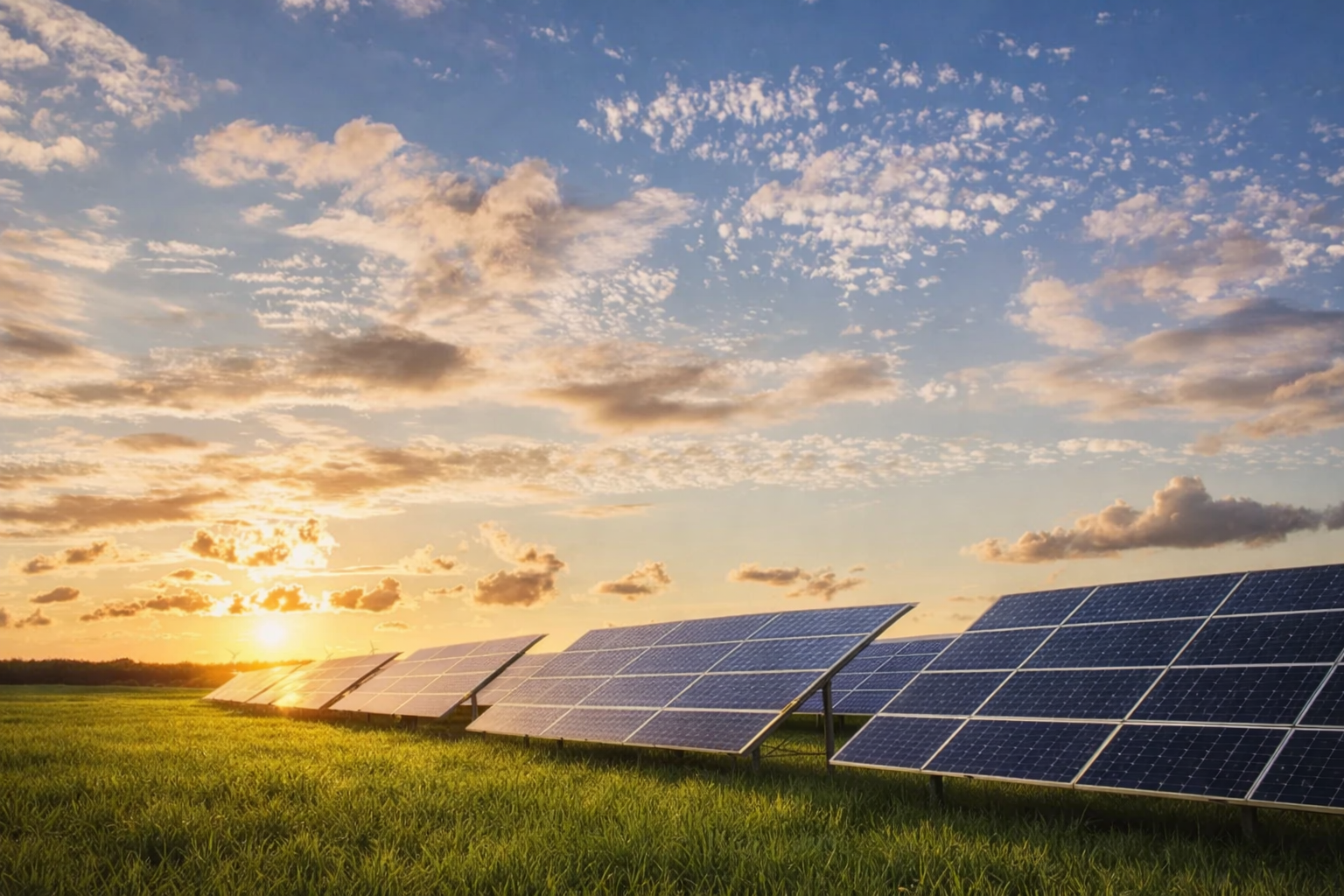
The Goliat Project will be using bifacial photovoltaic panels, and the installed capacity will reach up to 500 MW. The first part the Goliat Project consisting of 81.7MW– has been initiated in July 2025 and expected to be finalized by December 2026.
The Goliat Project has been planned with consideration of key environmental protection aspects and was preceded by a detailed verification of the project’s compliance with applicable national and EU social and environmental regulations.
The construction of the Goliat Project is supervised by Mashav Management, a company consisting of a team of qualified engineers and technical managers with many years of experience in the renewable energy sector.
Upon completion, it will stand as one of the major photovoltaic projects in Poland, greatly enhancing the nation’s renewable energy capacity.
Our valued partners
The project operates under the current support scheme for renewable energy, based on auctions conducted by the Energy Regulatory Office. The investment is financed by a consortium of two financial institutions: Bank Pekao S.A. and mBank.
First stage

The first stage of the Goliat Project involves the construction of a photovoltaic farm with a capacity of 81.7 MWp, for which approximately 115,000 Trina Solar panels and over 200 HUAWEI inverters will be installed. The modules will be mounted on steel structures in a three-row vertical layout and supplied by REMOR POLSKA S.A.
As part of the investment, 5 km of medium-voltage power lines with 10 STS transformer stations and approximately 20 km of underground high-voltage 110 kV power lines are planned. All will be connected to a newly built 30/110 kV substation.
Construction works began in July 2025 and are scheduled to be completed by December 2026.
Our investments
The Goliat photovoltaic farm, based on modern solutions, ensures high efficiency, reliable operation, and energy production fully in harmony with the environment.
The Goliat photovoltaic farm represents one of the key investments in the development of modern energy. Unlike traditional sources based on the combustion of fossil fuels, this installation significantly reduces greenhouse gas emissions. Its implementation contributes to improving the environmental balance of the national energy sector and supports the transition towards sustainable development.
The photovoltaic installation does not generate significant noise emissions during its operational phase. Minor sound sources, such as inverters or transformer stations, are designed in accordance with applicable standards and do not cause exceedances of permissible noise levels in the vicinity of the investment.
The location of the photovoltaic farm has been planned with careful consideration of environmental protection issues. Factors taken into account include protected natural and landscape areas, wildlife migration routes, and valuable plant habitats. As a result, the investment minimizes its impact on local ecosystems and supports the sustainable development of the region.
The project was included in regional development plans and it will provide additional tax revenues for local communities, among other things, in the form annual property fees
The implementation of the investment will bring other benefits for local communities, including the reconstruction of energy installations, new employment opportunities, and improvement of local road infrastructure. The land for the investment was obtained under lease contracts signed with land owners.